The Little Ones of the War, the Great Shame of Peace
The loss of three children during the war remains the greatest burden of Ibush Berisha from Bardh i Madh, Fushë Kosovë. He remembers his 12-year-old daughter and 15-year-old son with pain every time he visits their graves.
Neither of them survived the injuries they sustained after stepping on landmines while attempting to cross the border into Albania, hoping to find refuge there.
“A villager found my daughter and my eldest son while he was tending his cows. The explosion had thrown them about 30 meters away into a stream,” said Ibush, who also lost his mother and wife during the war.
However, he never found the body of Besnik, his 13-year-old son. All he has left of him are a few photographs.
“Maybe someone took him and buried him. The Serbs know,” Berisha said.
Nurije Curri from Fushë Kosovë is still searching for her youngest son, Xhevdet. A mother’s hope of finding the body of her 19-year-old son has never faded.
“He told me, ‘We’re going out to bring back the cows because everyone is leaving.’ I said, ‘No, my son, don’t go. If you go toward Pomozotin, the soldiers are there.’ But he went anyway. I waited one day, then two days, but there was no sign of him,” Nurije recalled.
These two families, along with many others, still have no place to go and remember their children who were killed during the war, even after 27 years. In total, 1,432 children were killed.
How is it that in a liberated Kosovo, not even a small piece of land has been found on which to place a memorial honoring these children?
Someone took the initiative to start such a project, but it still exists only on paper, despite many efforts to make it a reality.
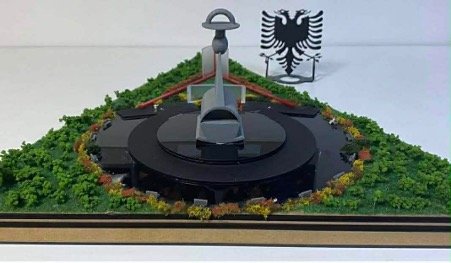
Nustret Pllana still has no answer as to whether his idea for an obelisk dedicated specifically to these children will ever be realized. Calling this mere negligence seems inadequate to him. According to Pllana, it represents a historical irresponsibility on the part of the relevant institutions and is therefore unforgivable.
“The absence of such a memorial for the families of our 1,432 martyred children is not only a failure of institutional culture and responsibility in the Republic of Kosovo. Before the progressive world, it sends the worst possible message—that Albanians suffer from a ‘genetic’ defect of forgetting their historical memory, one of the ugliest phenomena of our long-suffering and freedom-loving people,” Pllana said.
As the initiator of the obelisk project, Pllana still hopes that a memorial site for the slain children will one day be built. What keeps that hope alive is the significance of the project, which he considers a matter of national importance and therefore something that should be completed as soon as possible.
“As you know, I have never stopped demanding accountability from all our governments so that this project of special national importance can be completed as soon as possible. This would allow the families, our people, our institutions, friends and even former enemies to pay tribute to these children and lay fresh flowers in memory of them at the OBELISK, which would be built opposite the Adem Jashari International Airport on a one-hectare site (a ‘gift’ from the Municipality of Lipjan), where 1,432 Japanese bonsai trees would be planted,” Pllana stated.
Pllana says that the responsibility now lies with the government.
“The Government of the Republic of Kosovo should have taken the necessary steps to successfully complete this memorial complex (the OBELISK). It publicly promised to finish it in 2022, but has never provided a single explanation as to why the project has not yet begun, even though the Kurti government appointed the former Deputy Speaker of the Assembly, Ms. Saranda Bogujevci, as head of the working group,” Pllana said.
The idea of a memorial for the children is strongly supported by Ahmet Grajqevci, chairman of the Coordinating Council for Missing Persons and War Crimes.
“The institutions should have dealt with this issue instead of leaving everything to humanitarian efforts. This is an extraordinary idea because, as is known, we have more than 1,400 children who were killed or disappeared at various ages. More than 300 children are still missing. All of them should have a place where they can be remembered,” Grajqevci said.
Until a memorial honoring the sacrifice of these children is built, their stories will be remembered only at the Museum of the Children of War in Pristina.
There, on this June 1st as well, the children of the war will be commemorated—children who, in reality, represent the great madness and tragedy of peace.