FROM THE TORTURES OF SURVIVAL: THE TESTIMONY OF A SURVIVOR OF DUBRAVA PRISON
“Every moment we expected that this would be the moment they executed us.” With these words, former political prisoner Bislim Zogaj begins recounting the most traumatic experiences of his life in Dubrava Prison.
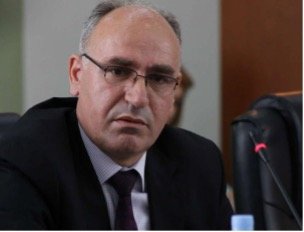
After being held in Mitrovica’s Remand Prison, on an April morning in 1999, Zogaj and around 150 other prisoners were informed that they would be transferred to Dubrava Prison, where more than 800 other inmates were already being held.
As they approached a place where they had no idea what awaited them, fear and tension intensified with every step. Anxiety was beyond control; uncertainty and violence surrounded them from all sides. When they finally reached their prison block, the reality proved to be far more horrifying than they had imagined.
The first days in prison were marked by harsh conditions, a lack of food, poor hygiene, and constant insecurity.
Everything changed dramatically on the morning of 19 May, when three powerful explosions shook Pavilion C and reverberated throughout the prison.
As a result, three people were killed and many others were injured. According to Zogaj, from that day onward, nothing remained under control. Fear, uncertainty, and violence became part of everyday life.
Exhausted from the struggle to survive and physically broken by continuous torture and abuse, the prisoners lived each day in constant fear and uncertainty.
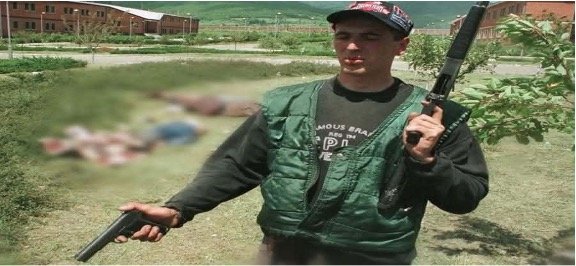
However, the trauma deepened even further when, on 22 May, shelling resumed inside the prison.
“It was never clear where the shelling came from—whether it was NATO, which suspected there were military bases inside the prison, or the Serbian forces themselves. Twenty-five prisoners were killed in these attacks, while another thirty-two were wounded. At the time, I was a medical technician, so I provided first aid to the injured, along with others who helped. The wounded remained in the prison yard throughout the night.”
The following day, approximately 900 prisoners were lined up on the orders of the Serbian forces. At first, they were told they were being transferred to another prison, but the truth quickly became apparent. “Initially, they told us we were supposedly being transferred to another prison, so they ordered everyone to gather. But the moment we assembled, shooting began from the watchtower—and not only from there. The Serbian forces had prepared the area in advance. The wall of the guard post, which was about five meters high, could not accommodate many shooters, so to maximize the number of prisoners they could execute, they had positioned several truck trailers as firing platforms. They opened fire simultaneously with all the weapons they had. Many people were killed or wounded. As soon as the shooting started, everyone ran to escape the area. About one hundred meters away there was a dip in the ground, and that depression helped many of us hide and avoid bullets and bombs.”

Escaping the prison itself was impossible because of the high walls. Some prisoners ran desperately toward the prison blocks, while others searched for different places to hide.
“There were cases where prisoners climbed into larger manholes to save themselves, but the guards spotted them and threw grenades into those openings.”
During the night of 22 May, uncertain what the next day would bring, Zogaj cared for the wounded, placing them in Pavilion C.
The following day, the same scenario repeated itself. Once again, all the prisoners were lined up by order of the Serbian forces—but this time, not to kill them immediately. Instead, they asked a question.
Amid dozens of wounded and dead prisoners, Zogaj suddenly found himself facing a situation he had never imagined. Without knowing what awaited him, he did not hesitate when the Serbian forces asked who the “doctor” was who had been treating the wounded.
“At first, when they asked which of us could provide first aid to the injured, I honestly thought they wanted to identify the doctor so they could kill him. After hesitating for a moment about whether to stand up, I thought it would be better that I stand than that someone else be killed in my place. I said, ‘Yes, it’s me.’ Then they told me I had to stay there while the others brought me the wounded.”
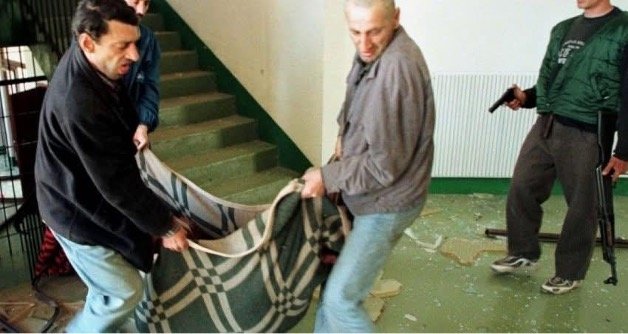
Throughout that night, gunfire directed at the prisoners continued without interruption. In the darkness, many remained suspended between life and death.
For Zogaj, what he witnessed was beyond description—a living nightmare that has never faded with time.
Mutilated bodies, signs of merciless violence, and scenes that defied every sense of humanity became permanently etched into his memory, remaining an open wound to this day.
“There were 109 people who were severely wounded and in critical condition, and we had to care for them. There were cases where I could see a person’s lungs through a large, deep wound. Others had wounds to the neck so severe that their windpipe was visible.
I remember one wounded man in particular. As I went to give him first aid, I lifted his head. When I removed my hand, part of his brain remained in my hands. A few minutes later, he died.”
That same night, as Zogaj had now become known as “the doctor,” an elderly prisoner approached him with an extraordinary request.
“A man about sixty years old came to me and said, ‘Please, doctor, take my life yourself. Better that you kill me than let the Serbs do it.'”
After four days of terror, on 25 May, more than 600 prisoners were transferred by buses and trucks to Lipjan Prison, where they remained until June.
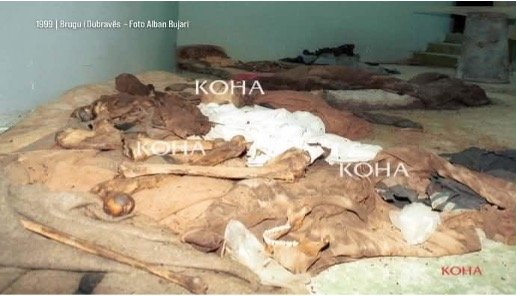
They were later transferred to prisons in Serbia, mainly Niš Prison and Požarevac Prison.
What Zogaj endured at Dubrava Prison went beyond imagination, but his experience with imprisonment had begun much earlier.
At the beginning of 1997, while imprisoned in Prishtina Prison, Serbian authorities repeatedly demanded detailed information about the Kosovo Liberation Army (KLA). Zogaj’s refusal to speak came at the cost of relentless and inhumane torture.
“One of the forms of physical torture—which lasted seven days and made me beg them to kill me—was when Serbian forces demanded information about the KLA. They wanted me to admit that I had been a member. They repeatedly struck only my fingers with an iron rod until all my fingernails fell off. I couldn’t do anything afterward—not even feed myself. They also tortured me with electric shocks. The loudest screams of my life came during those sessions.”
Yet he remained unbroken in the face of psychological torture, which he says was often even worse than the physical abuse.
“They constantly demanded information from me. One night, on the floor below mine, they were torturing a woman. Her screams echoed loudly throughout the building. They told me, ‘That’s your wife, and she doesn’t know what to say. So you tell us, because otherwise we’ll kill her slowly.’ Sometimes I ask myself how I managed to endure that kind of violence.”
Bislim Zogaj spent more than four years in prison and was released only after the end of the Kosovo War, when many of these prisons were burned in an attempt to erase evidence of the crimes committed.
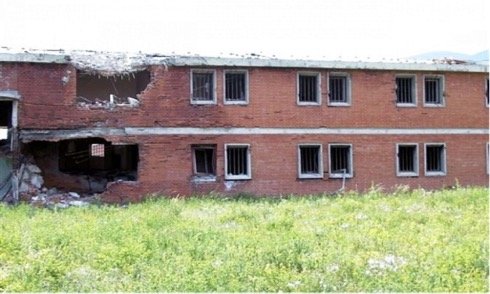
Among those imprisoned during the Dubrava Prison Massacre was Ukshin Hoti, who remains one of more than 1,600 missing persons whose fate has still not been determined.